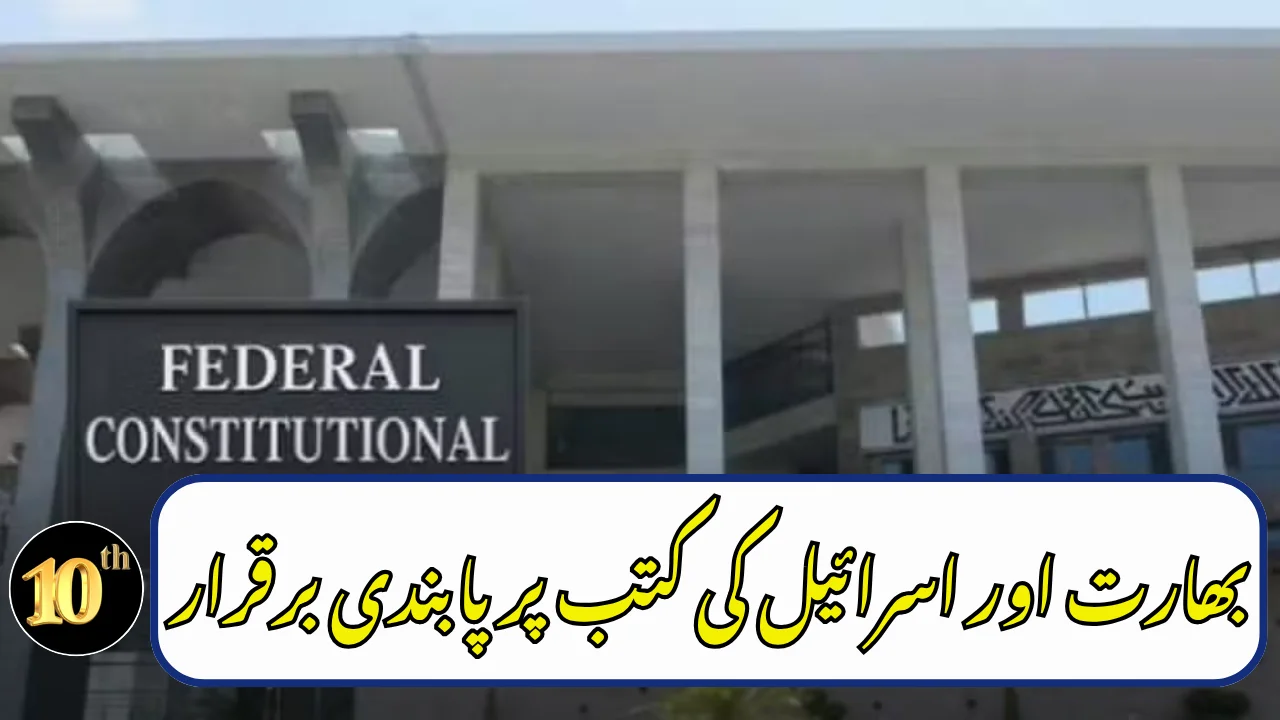
In an important legal decision, the FCC has supported the government’s ban on importing books from India and Israel.
The ruling explains the limits of the right to read and confirms the government’s authority in matters related to national policy.
⚖️ Right to Read Has Limits
In the judgment written by Justice Aamer Farooq, the court explained:
- The right to read comes from Article 9 of the Constitution
- But this right is not unlimited
- It can be restricted under certain laws
This is seen as an important clarification of constitutional rights.
🏛️ Government Acted Within Its Powers
The court noted that the government:
- Issued SROs 927 and 928(I)/2019
- Acted within its legal authority
The decision was based on:
- Foreign policy concerns
- National security
- Government’s own authority to make such decisions
🌍 Courts and Foreign Policy
The court also made it clear that:
- Foreign policy is handled by the executive branch
- Courts usually do not interfere in such matters
This strengthens the role of the federal government, including:
- The Prime Minister
- The Federal Cabinet
📜 Earlier Case
The case was first heard by the Lahore High Court, which:
- Accepted the legality of the SROs
- Gave some instructions to the government
Later, these points were challenged, leading to this final decision.
📖 Constitutional Basis
Referring to Article 97, the court said:
- The federal government has authority over national matters
- This includes regulating trade based on national interest
💡 Why This Decision Is Important
This ruling matters because it:
- Explains the limits of personal rights
- Strengthens government authority in security matters
- Clarifies the role of courts in foreign policy
🧾 Final Words
The court’s decision shows the balance between individual rights and national interests.
While people have the right to read, the ruling makes it clear that this right can be limited when it conflicts with larger state concerns.