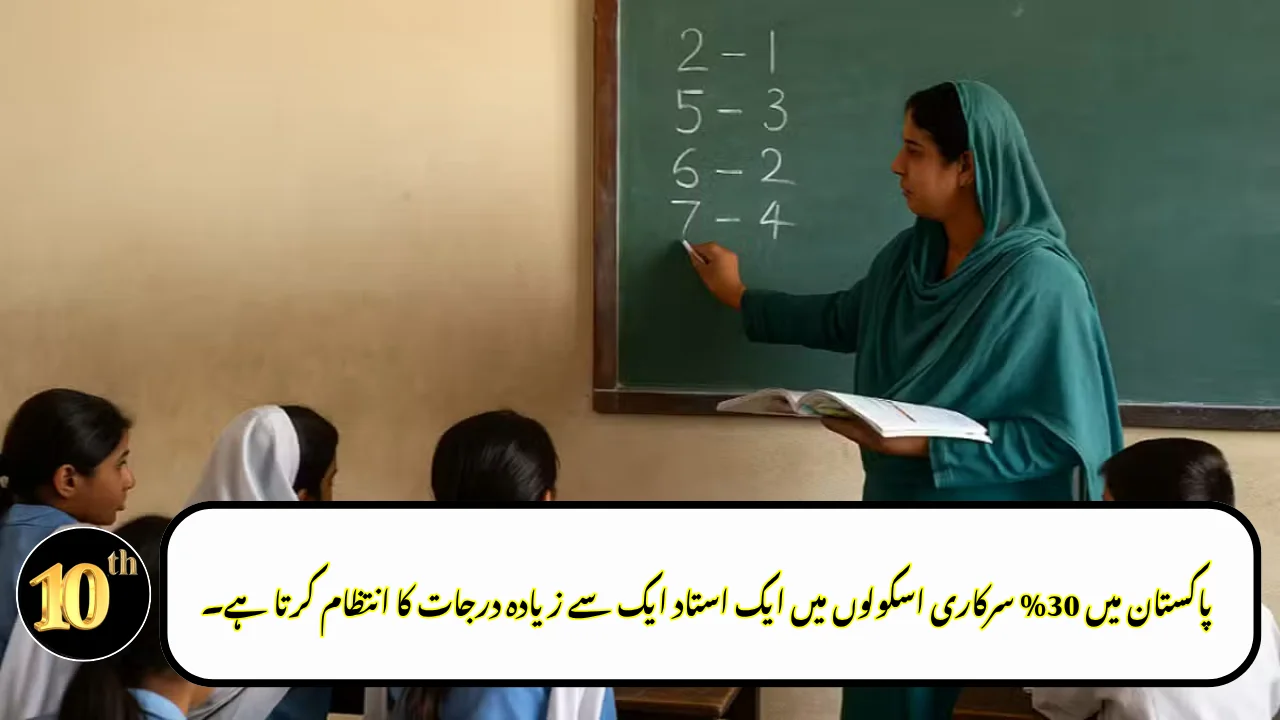
Nearly 30 percent of government schools in Pakistan have a single teacher simultaneously managing students from multiple grades, according to a recent analysis by Gallup Pakistan.
The findings highlight persistent staffing and infrastructure challenges in the country’s public education system despite improvements in school enrolment and access over the years.
Multigrade Teaching More Common in Government Schools
The survey found that:
📚 30% of government schools operate with multigrade teaching arrangements, where one teacher is responsible for instructing students from different classes at the same time.
In comparison:
🏫 20% of private schools reported similar practices.
The gap suggests that public schools continue to face greater resource constraints and teacher shortages than their private-sector counterparts.
Infrastructure Gaps Persist in Public Schools
The survey also revealed significant differences in the availability of basic facilities at the primary level.
Boundary Walls
- Government schools: 71%
- Private schools: 81%
Drinking Water Facilities
- Government schools: 60%
- Private schools: 74%
Student Facilities Also Lag Behind
Student-facing facilities remain less available in public schools.
Toilets
- Government schools: 60%
- Private schools: 74%
Playgrounds
- Government schools: 45%
- Private schools: 52%
The findings indicate that many public schools still struggle to provide essential learning environments and student amenities.
Digital Divide Remains Significant
The gap becomes even more pronounced in access to technology.
Internet Access
- Government primary schools: 7%
- Private schools: 32%
Computer Labs
- Government schools: 3%
- Private schools: 17%
The data suggest that digital learning opportunities remain highly limited in government schools, potentially affecting students’ exposure to technology and digital skills.
Uneven Learning Environment
According to Gallup Pakistan, the findings indicate that while Pakistan has made progress in expanding access to education, substantial disparities remain in the quality of learning environments between public and private schools.
The report also noted that:
- Smart boards remain scarce across both sectors.
- Science laboratories are available at low levels in both public and private schools.
- Technology-enabled learning remains limited nationwide.
The findings are likely to reignite discussions about teacher shortages, school infrastructure, and digital transformation in Pakistan’s education sector, particularly as governments increasingly emphasize technology-driven learning and improved educational outcomes.